I can’t remember what drew my attention to my cell phone as I was crossing the street, but what ensued was a dangerous distraction.
My foot caught something, I lost my balance and tripped, and the cars were coming from all directions as I tried to recover my stance and prevent a full faceplant.
I felt my knees buckle as my legs lifted into an exaggerated prance – the visual transformed into slow-motion, capturing every awkward millisecond.
My body was gazelle-like, delicate with pointed toes reaching for the other side.
The crash jolted me out of the time-lapse, as my right shoulder felt the hard landing first.
My head was the last thing to hit the pavement before the screeching of tires, stares of disbelief, and embarrassment swept over my face.
For a long moment the world took a collective breath of disbelief. A woman in one of the cars came to my rescue, asking where I was headed.
“I’m fine… really, I’m fine,” I stammered. But no, I wasn’t fine.
I gingerly lifted off the sidewalk’s edge, and shock set in as I cautiously walked to the woman’s car uncertain of the damage I’d done to my body.
At this point, I wondered if answering my phone was becoming a habit or if there was something urgent needing my attention. I couldn’t remember.
Life can be a series of stumbles carelessly interrupting our stride.
For me, it was a number of minor missteps, which presented as a sequence of video frames unfolding in slow motion until the final crash.
These incidents may bruise our pride, test our patience, and throw us off balance, but they’re usually easy to shake-off and recover from as we move on with life.
Other stumbles can trigger greater consequences, including those which broadside us unexpectedly.
The video frames seem to unravel as they travel down that unstoppable path towards the collision – whether it‘s a financial loss, a failure, a betrayal, a diagnosis, a divorce, or some other tragedy that may seem catastrophic at the time and leave us grappling with how to cope and move forward.
Yet research suggests that those events, while deeply painful, don’t always define the end of a person’s story. They can represent the place where rebuilding begins.
Resilience has shown to be the most common long-term response to major stressors and trauma.
Psychologists studying resilience have found that most people who experience significant adversity do not remain permanently broken by it.
Typically, people don’t emerge from difficult experiences unchanged or regretful of the experience which caused reconsideration and a shift in behaviour. More often than not, they emerge transformed and energized.
In the 1990s, researchers Richard Tedeschi and Lawrence Calhoun introduced the concept of post-traumatic growth, describing how positive psychological changes can occur as individuals struggle with profound challenges.
They detailed how these people can develop stronger relationships with loved ones, increase their personal inner strength, and have a greater appreciation for what’s truly important to them.
Perhaps this explains why some of our most profound lessons come from life’s stumbles.
In my case, the lesson may have seemed minor, but my shift in behaviour was undeniably life changing. When my phone grabs my attention for any reason while I’m in motion, I now stop and step aside before reviewing the message.
Although a particular incident itself may feel catastrophic, over time, we often discover that what appeared to be an ending was also a beginning.
The career failure leads to a more authentic path, the heartbreak opens space for deeper connection, and the setback initiates reflection, which can reveal strengths we never knew we possessed.
Human beings aren’t defined solely by the moments when they fall. They’re equally defined by what happens afterward, as they develop the courage to stand, the willingness to be accountable and rebuild, and the capacity to create meaning from what was lost.
Rather than a unique trait possessed by a fortunate few, resilience is increasingly understood as a natural human capacity to assess, adapt, recover, and continue forward despite suffering hardship.
In the life coaching world, we call this process “Notice and define, correct and continue.”
All things considered, children and adults often experience life’s stumbles very differently because they see and engage with the world differently.
When adults stumble, they start asking things like, “Why did it happen? What does this mean? And what if it happens again?”
Children, by contrast, are more in the moment.
Although they can feel disappointment, sadness, or frustration, they’re less likely to investigate the meaning of their failures.
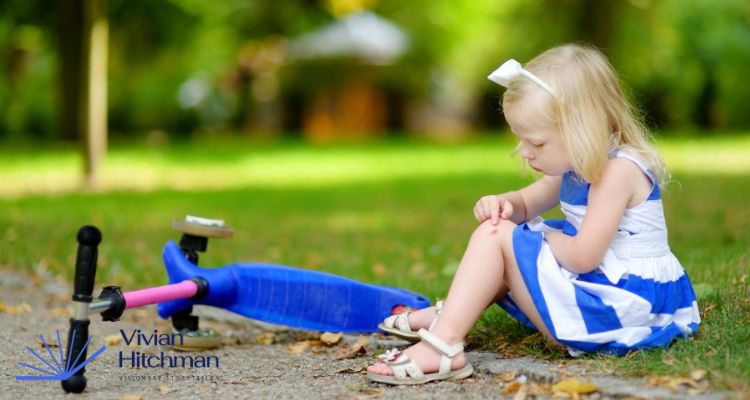
A child may fall off a bicycle, cry, seek comfort, and then return to riding minutes later after simply saying, “Let’s try it again!”
Research into developmental psychology suggests that children possess a remarkable capacity for adaptation, not least because they naturally experiment with different ways of responding to challenges, including things like using imagination, play, curiosity, and social connection to make sense of difficult experiences.
Rather than getting stuck in the analysis of the situation, they delight in discovering life’s simple and colourful explanations that will allow them to move forward.
This difference is especially evident during major life disruptions like parental separation, moving to a new school, or recovering from a disappointment.
Adults frequently focus on what has been lost. But children, although they may be affected by the loss, often begin searching for new routines, new relationships, and new ways of belonging.
Their resilience is rooted not in understanding everything, but in their ability to keep growing despite not understanding everything.
A growing body of evidence suggests that every child who winds up doing well has had at least one stable and committed relationship with a supportive adult.
Jack Shonkoff, M.D., professor of pediatrics at Harvard Medical School and Boston Children’s Hospital, emphasizes that resilience among children is built through relationships, support, and opportunities to develop coping skills.
“The most resilient children are not those who never fall, but those who have someone beside them when they do,” said Shonkoff.
He states that “What is meant by resiliency is the ability to do well, the ability to cope, the ability to overcome hardship, or adversity, or threat to your well-being. Resilience appears to be a capacity that is part of human nature, but people differ in how readily they can access and strengthen it.”
Adults bring wisdom, perspective, and foresight. Children bring flexibility, creativity, and a natural willingness to try again. They want to keep exploring after they have landed. Neither approach is right or wrong. Rather, they complement and complete one another.
Thus, the two sides of the resiliency coin: the ability to understand and find meaning in adversity, while having the ability to move through it. Both are important.
Going back to my fall, it was resiliency that got me up and moved me forward towards a solution.
I continue to have my phone on me most times, but I cross the road hands-free with my eyes on my surroundings.
The wonderment of the child in me is blended with the adult in me needing to understand.

My children’s book, Different Families, Different Drawers offers an example of how children show resilience by allowing their imaginative minds to make sense of life’s difficult situations.
You can find it on Amazon here.

About Vivian
Visionary storyteller, Vivian Hitchman, authors inspirational, imaginative, and empowering works, with a focus on helping people understand life’s meanderings.
Through her writings, she encourages kids to be resilient and steadfast against negative input, helping them to find the positives in their experiences.
Applying her years of experience and expertise as a life coach, Vivian challenges readers to move beyond their limiting beliefs, negative self-talk, and destructive patterns of behaviour, helping them gain greater resiliency and fulfillment in their lives.